
Learn About Internships
Clinical Internship Program
Journey to Healing offers hands-on clinical internship, practicum, and field placement opportunities for students preparing for careers in social work, counseling, psychology, behavioral health, psychiatric mental health, and related helping professions.
We welcome students at different stages of their education, including bachelor’s-level students, foundation or generalist graduate students, advanced master’s-level clinical interns, and other eligible trainees based on university requirements, placement needs, and available supervision.
Our interns gain more than required hours. They gain exposure to what it means to provide care in real-world settings while supporting children, youth, adults, and families impacted by grief, trauma, stress, life transitions, family challenges, and other mental health concerns.
At Journey to Healing, clinical learning is connected to the larger mission of creating safe, healing-centered spaces in clinics, schools, shelters, community settings, and partner organizations.


1. Internship Experience
Journey to Healing provides a hands-on learning experience rooted in trauma-informed care, clinical practice, and community mental health.
Depending on the student’s level, program requirements, readiness, and supervisor approval, internship experiences may include:
- Individual counseling
- Group counseling
- Family support or family therapy
- Intake and assessment
- Treatment planning
- Clinical documentation
- Case consultation
- Case management and resource navigation
- Psychoeducation
- Youth emotional wellness programming
- Grief and trauma-informed services
- School-based and shelter-based programming
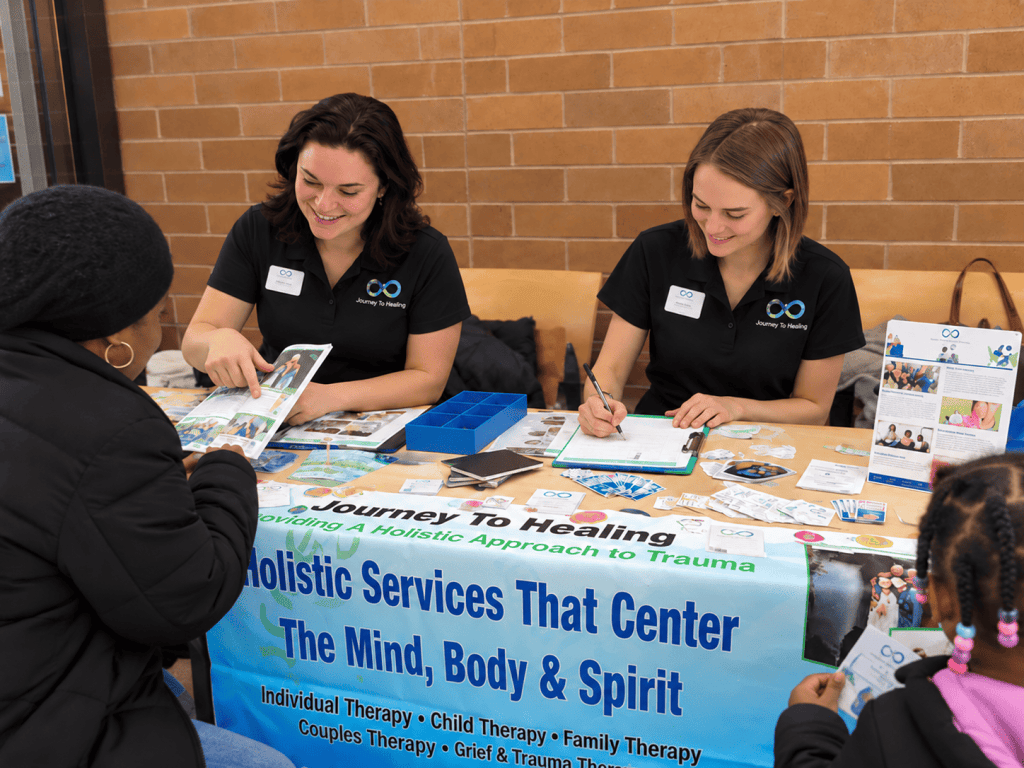
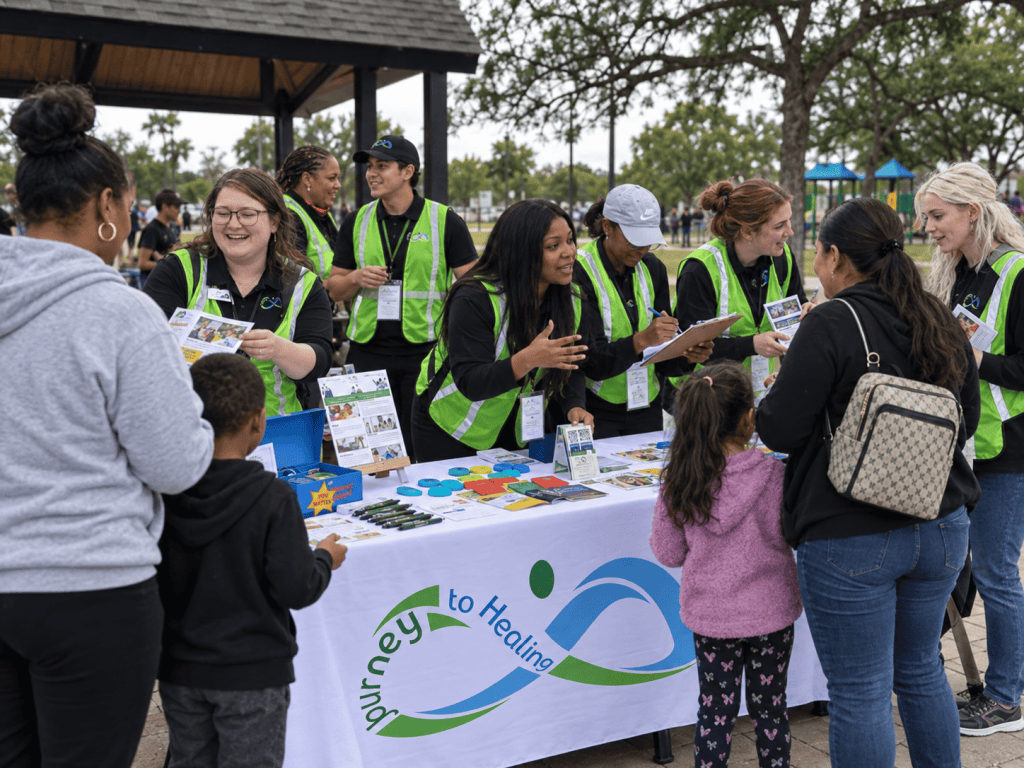
- Community outreach and wellness events
- Partner-site services
Interns are exposed to how therapy, prevention, education, outreach, and community partnerships work together to support healing.
2. What We Do at Journey to Healing
Journey to Healing is a nonprofit mental health organization focused on helping children, youth, adults, families, and communities heal, strengthen relationships, and build resilience.
We support individuals experiencing concerns such as:
- Grief and loss
- Trauma
- Anxiety and depression
- Emotional regulation challenges
- Family stress and conflict
- Life transitions
- Community violence
- Parenting challenges
- Youth behavioral and emotional concerns
Our work includes clinical therapy, family and youth wellness programming, grief support, psychoeducation, community outreach, school-based services, shelter-based support, and partnerships with organizations serving vulnerable and underserved communities.
Interns gain an understanding of mental health beyond the therapy room and learn how social, family, environmental, and community factors can affect a person’s overall well-being.
3. Student Levels & Placement Types
Internship responsibilities are based on the student’s educational level, degree program, scope of practice, university requirements, and available supervision.
Bachelor’s-Level Students
Bachelor-level students, including BSW and related behavioral health students, may gain foundational experience in:
- Client engagement
- Case management
- Resource navigation
- Psychoeducation
- Youth and family support
- Behavioral health programming
- Documentation support
- Community-based services
Foundation or Generalist Graduate Students
Foundation-level students may gain experience developing generalist behavioral health and social work competencies through:
- Client engagement
- Case conceptualization
- Group and family support
- Documentation
- Assessment support
- Case management
- Psychoeducation
- Community mental health services
Advanced Clinical / Master’s-Level Students
Advanced clinical interns in counseling, social work, psychology, and related programs may have opportunities to participate in:
- Individual therapy
- Family therapy
- Group therapy
- Clinical assessment
- Treatment planning
- Clinical documentation
- Case consultation
- Diagnosis and case conceptualization, when appropriate to the student’s scope and training
- Direct clinical interventions under supervision
Psychiatric Mental Health Students
Journey to Healing may also consider psychiatric mental health students, including eligible PMHNP trainees, when appropriate psychiatric preceptorship, clinical opportunities, and supervision are available.
All placement responsibilities are determined individually and must remain within the student’s educational scope and level of competency.
4. Internship Benefits
Interns at Journey to Healing are supported in developing both clinical confidence and professional identity.
Benefits may include:
- Supportive supervision from experienced professionals
- Exposure to trauma-informed and culturally responsive care
- Experience working with diverse populations
- Opportunities to work with children, youth, adults, and families
- Training in assessment, documentation, and treatment planning
- Opportunities to participate in individual, family, and group services
- Exposure to school, shelter, clinical, and community settings
- Experience working within a nonprofit behavioral health organization
- Opportunities to strengthen client engagement and communication skills
- Support in developing a clinical voice and professional identity
Our goal is for interns to grow not only in skill, but also in self-awareness, ethical judgment, confidence, and understanding of the responsibility that comes with serving others.
5. Supervision & Clinical Support
Interns are not expected to navigate the clinical learning process alone.
Depending on the student’s discipline and university requirements, support may include:
- Individual supervision
- Group supervision
- Case consultation
- Review of clinical documentation
- Treatment planning support
- Clinical skill development
- Ethical decision-making
- Crisis and safety consultation
- Feedback and professional development
Supervision is matched to the student’s discipline, program requirements, placement needs, and available qualified supervisors or preceptors.
All clinical services provided by interns are monitored to support ethical practice, client safety, professional growth, and Journey to Healing’s standards of care.
6. Clinical Approach
Journey to Healing uses a trauma-informed, culturally responsive, strengths-based, and healing-centered approach to care.
Depending on placement and clinical level, interns may gain exposure to approaches and interventions such as:
- Cognitive Behavioral Therapy (CBT)
- DBT-informed skills
- Trauma-Focused CBT concepts
- Grief-informed care
- Person-centered counseling
- Strengths-based approaches
- Psychoeducation
- Emotional regulation strategies
- Mindfulness-based coping skills
- Developmentally appropriate play and expressive interventions
- Family systems and communication strategies
Interns are encouraged to develop their own clinical style while learning how to remain ethical, culturally aware, evidence-informed, and responsive to the individual needs of each client.
7. Populations & Settings Served
Interns may have opportunities to work with:
- Children
- Adolescents
- Adults
- Parents and caregivers
- Families
- Individuals experiencing grief and loss
- Individuals impacted by trauma
- Youth experiencing emotional or behavioral challenges
- Families experiencing housing instability
- Students in school-based settings
- Individuals and families receiving services through community partners
Depending on placement, interns may serve clients in:
- Clinical settings
- Schools
- Shelters
- Community organizations
- Family and youth programs
- Partner sites
- Community wellness events
This gives interns the opportunity to understand how mental health needs may look different depending on a person’s environment, resources, relationships, and lived experiences.
8. Internship Requirements
Requirements vary based on the student’s school, degree program, placement level, and clinical track.
General requirements may include:
- Enrollment in an approved social work, counseling, psychology, nursing, behavioral health, or related program
- University or field-placement approval
- Ability to meet required practicum, field, or internship hours
- Completion of Journey to Healing onboarding requirements
- Background checks when required
- Participation in required supervision
- Timely completion of documentation
- Ability to maintain confidentiality
- Professional and ethical conduct
- Willingness to work with diverse individuals and communities
- Openness to feedback and continued learning
Students must follow Journey to Healing policies, university requirements, applicable ethical standards, and the expectations of their professional training program.
9. What Interns Can Expect
Interns can expect a learning environment that is supportive, structured, challenging, and focused on professional growth.
During placement, students may:
- Develop stronger client engagement skills
- Build confidence in clinical decision-making
- Strengthen assessment and documentation skills
- Participate in supervision and case consultation
- Learn how trauma, grief, family systems, and community stressors affect mental health
- Gain experience working with diverse populations
- Develop greater awareness of ethics, boundaries, and professional responsibility
- Learn how to receive feedback and apply it to clinical practice
- Better understand how community-based behavioral health organizations operate
Journey to Healing values interns as developing professionals and expects students to take an active role in their own learning.
10. University Partnerships
Journey to Healing welcomes partnerships with colleges and universities seeking quality field experiences for their students.
Depending on program needs and agency capacity, we may support:
- Practicum placements
- Bachelor’s-level field education
- Foundation/generalist placements
- Advanced clinical internships
- Counseling internships
- Social work field placements
- Psychology or behavioral health placements
- Psychiatric mental health clinical training
- Community mental health experiences
University affiliation agreements, learning contracts, or other formal placement documentation may be required before a student begins.
Students should confirm that Journey to Healing meets their university’s placement and supervision requirements before beginning the placement process.
11. Who Is a Good Fit?
Journey to Healing may be a strong fit for students who are:
- Compassionate and open to learning
- Reliable and professional
- Comfortable receiving feedback
- Interested in trauma-informed and community-based care
- Passionate about serving children, families, and underserved communities
- Committed to cultural humility
- Able to work collaboratively
- Willing to reflect on their own growth and professional development
- Interested in understanding the whole person, not simply a diagnosis
We believe becoming a strong clinician requires more than learning interventions. It requires self-awareness, consistency, curiosity, ethical judgment, compassion, and the ability to build meaningful relationships with the people you serve.
12. How to Apply
Students interested in completing a clinical internship, practicum, or field placement with Journey to Healing should submit:
- Resume
- Brief statement of interest or cover letter
- College or university
- Degree program
- Current training level
- Required number of hours
- Requested semester and placement dates
- University internship or field-placement requirements
- Areas of clinical interest
- Population preferences, if applicable
- Specific supervision or preceptor requirements
Applications are reviewed based on the student’s goals, university requirements, available supervision, current agency capacity, and whether Journey to Healing can provide an appropriate learning experience.
Submitting an inquiry does not guarantee placement.
13. Important Policies
Interns are expected to follow Journey to Healing policies, university requirements, confidentiality standards, and applicable professional ethics.
Students are expected to:
- Maintain client confidentiality
- Complete documentation on time
- Attend required supervision
- Communicate absences or schedule changes appropriately
- Maintain professional boundaries
- Follow mandated reporting requirements
- Follow safety and crisis-response procedures
- Communicate professionally with clients, staff, supervisors, and community partners
Any recording, observation, research, or special university assignment involving clients or Journey to Healing programs must be discussed and approved in advance.
Grow With Journey to Healing
An internship at Journey to Healing is an opportunity to learn clinical skills while also understanding the larger systems that influence mental health.
Whether you are beginning your first field placement or preparing to enter advanced clinical practice, our goal is to help you leave the experience more prepared, more self-aware, and more confident in your ability to provide meaningful and ethical care.